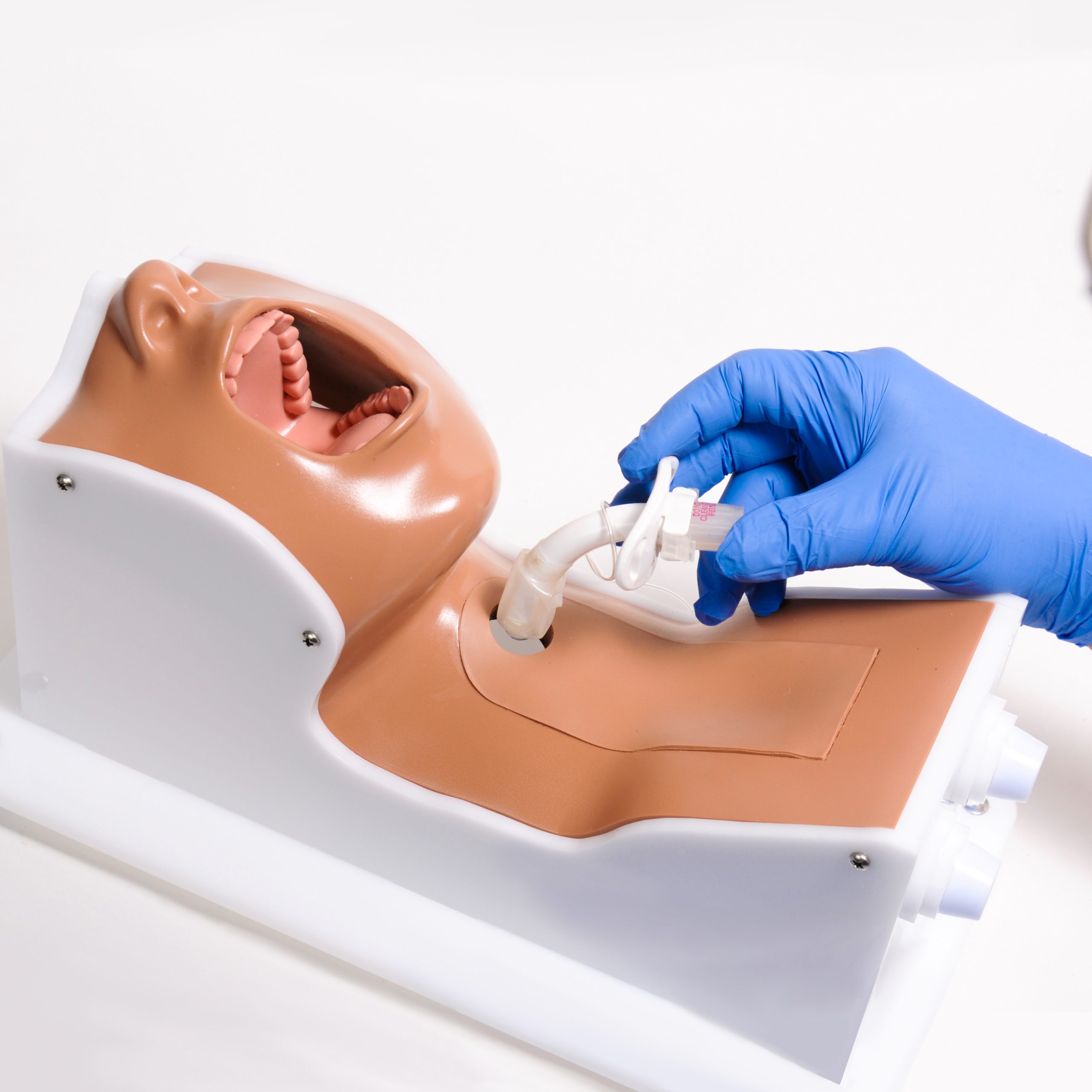
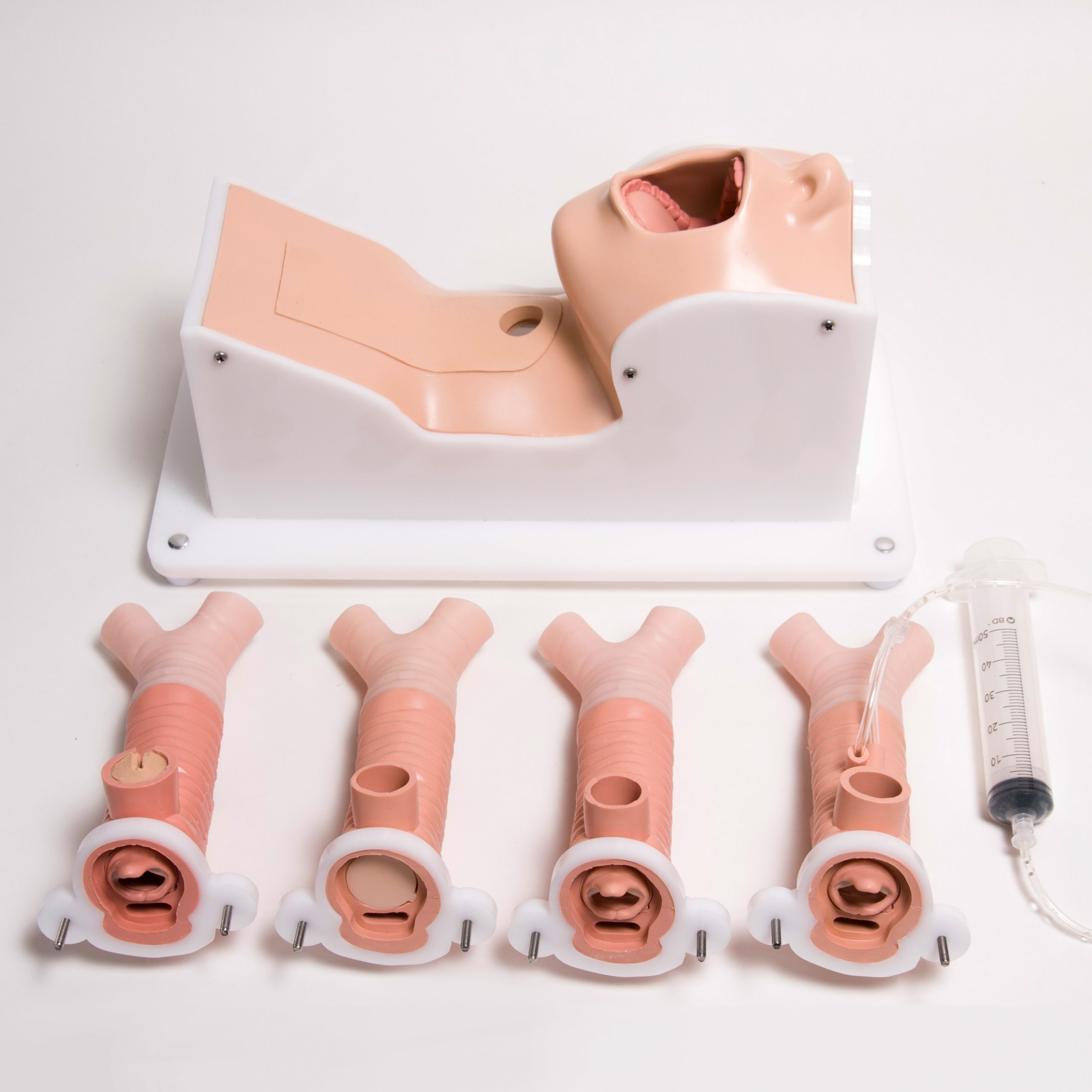
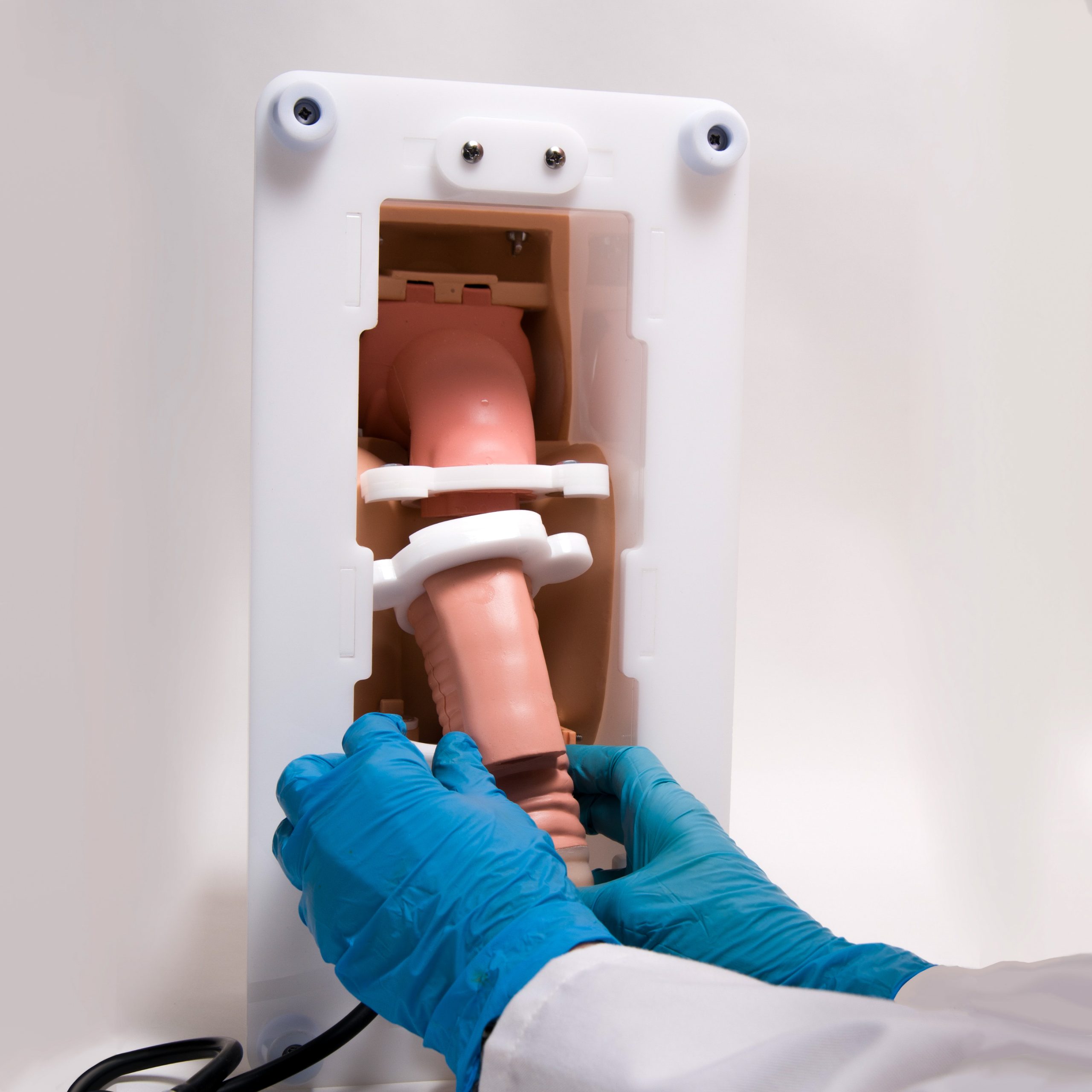
Lower face and neck– The lower face and neck model include the proximal portion of the esophagus, an open mouth, a soft tongue, a tracheostomy stoma, and unbreakable teeth. From the back side of the model, the trachea model variations can be swapped out. They snap into position and are held securely with a clip and magnets.
Trachea Inserts:
New Tracheostomy/Acute– Right after surgery, the tissue tract between the skin and the trachea takes time to heal. If the freshly placed tracheostomy tube becomes displaced, it can easily move into a false passage (located in the space in front of the trachea) instead of in the trachea. This leads to respiratory distress and must be immediately managed by the clinician. Similar to the real clinical scenario, this model allows for oro-tracheal intubation. Attempts at placing a tracheostomy tube into the fresh stoma would usually be unsuccessful in real life as well as in our model.
Healed Tracheostomy/Chronic– In a healed tracheostomy, the tissue between the skin and the trachea is connected. The clinician can get a feeling of the typical trach tube insertion and compare how it feels with a new/acute tracheostomy.
Total Laryngectomy– In general, if the tracheostomy tube comes out and cannot be quickly replaced, clinicians may be required to intubate the patient. However, if the patient has a total laryngectomy, intubation through the mouth is not possible as the opening at the top of the trachea is surgically blocked off. The model provides help to train clinicians on how to diagnose and restore the airway for a total laryngectomy.
Tracheo-Innominate Fistula– Chronic patients can sometimes experience a trachea innominate fistula, which is when the tracheostomy tube rubs through the anterior wall. This can result in blood entering the trachea and lungs which causes a critical airway event for the patient. The Pulse MDM model includes an innominate artery that bleeds.
Although this custom model is not available for sale to the public, we are delighted to make you a version that is specific to your unique medical device and procedure. Please use this link to start the process of receiving a model concept; a visual representation of how clinicians and patients will experience your product and procedure. Pulse MDM does not charge for model concepts or the conversations around them so there is no risk to see how we can help you to tell your story in the most engaging and memorable way possible.